

Most combinations involve a sacrifice (giving up material). But not all sacrifices are created equal. To ensure your combination is sound, you must understand the difference between a True Sacrifice and a Calculated Sacrifice.
1. True Sacrifices (Positional)
When you make a true sacrifice, analysis of specific variations becomes secondary. Instead, you must evaluate abstract factors like piece activity, blockades, and long-term weaknesses.
Example: The Caro-Kann Advance
Consider the position resulting from these moves:
1.e4 c6 2.d4 d5 3.e5 Bf5 4.g4 Bg6? 5.h4 h6 6.e6! fxe6 7.Nf3
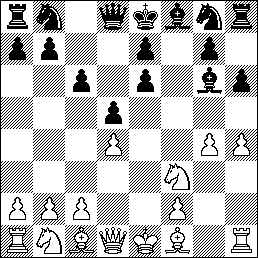
White has sacrificed the e-pawn. Was it sound?
Sheer calculation is not enough here. You cannot calculate "Mate in 20." Instead, you must assess the position abstractly:
This ability to think in abstract concepts (blockade, restriction, overprotection)—vocabulary passed down by masters like Nimzowitsch—is what separates human understanding from raw computer calculation.
2. Calculated Sacrifices (Tactical)
In calculated sacrifices, it is vital to "fact-check" your combination. You must realistically assess the opponent's defensive resources.
The Risk of Optimism: As humans, we are often tempted to gamble, hoping the opponent will miss a defense. However, reliance on "hope chess" will halt your progress against higher-rated players.
Computers excel here because they play the objectively best move every time. To ensure soundness, assume your opponent will find the best defense. If your combination still works against their best defense, proceed with confidence!